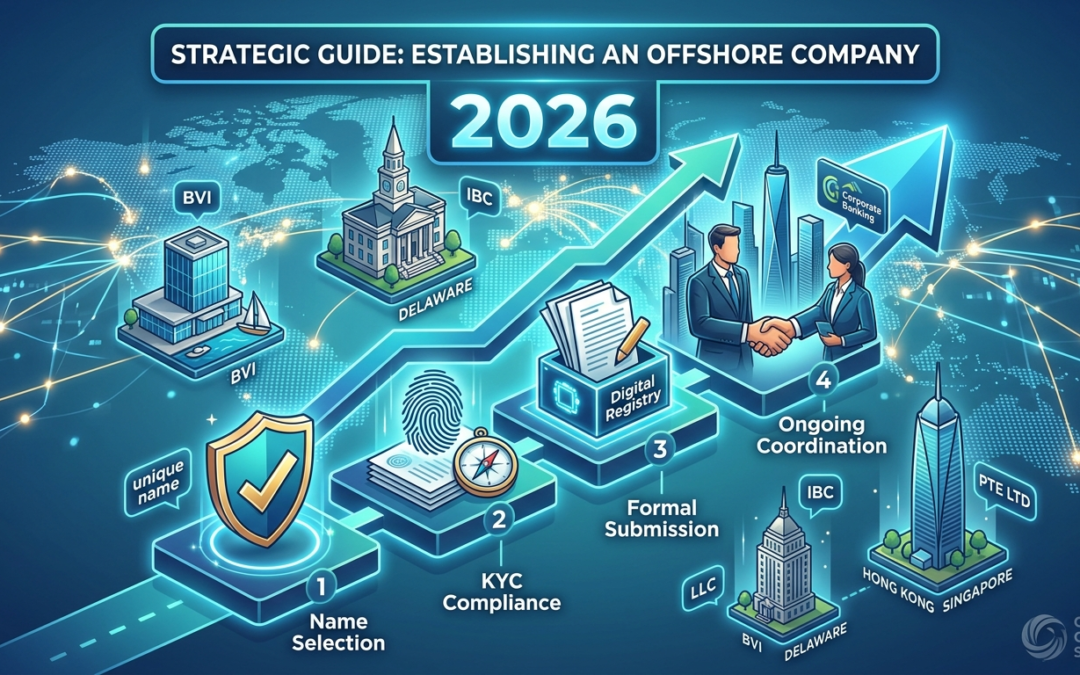
Are you looking to expand your global footprint? Offshore business structures, such as the BVI Business Company or a Delaware LLC, have become premier choices for entrepreneurs seeking flexibility and international presence.
How to establish an offshore company in 2026? This guide outlines the essential process for establishing an offshore entity, from the initial planning phases to formal incorporation. By following these steps, you will gain a clear roadmap for successfully managing a cross-border corporate structure.
Phase 1: Pre-Incorporation Preparation
Success in offshore structuring depends heavily on the quality of your preparation. Before filing any paperwork, address these three critical pillars:
- Master the Concept: Research how offshore jurisdictions align with your specific business model. Understanding the operational nuances of different regions will help you minimize risks and make informed long-term decisions.
- Secure Professional Coordination: Navigating the complexities of international regulations requires expert oversight. Engaging with Offshore Company Specialist is the most effective way to manage the intricacies of the process. A dedicated partner handles:
- Document collection and guidance on specialized forms.
- Liaising directly with government authorities for registration.
- Post-incorporation essentials, including bank account opening, tax compliance, and annual reporting.
- Financial Planning: Establish a comprehensive budget. Beyond initial registration fees, account for administrative costs such as corporate seals, director registration, office space requirements, and document authentication (apostille).
Choosing the Right Corporate Structure
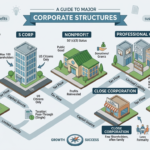
The ideal structure depends on your jurisdiction, desired level of flexibility, and specific commercial goals. While several options exist, three structures remain the industry standards:
1. International Business Company (IBC / BC)
Commonly utilized in the BVI, Belize, Seychelles, and the Marshall Islands, the IBC is designed for international trade and investment. It typically offers high privacy standards, minimal reporting requirements, and rapid incorporation.
2. Limited Liability Company (LLC)
Popular in Delaware, Anguilla, and St. Kitts & Nevis, the LLC blends corporate and partnership features. It provides robust asset protection, shielding members from personal liability for business debts, and often features simplified reporting.
3. Private Limited Company (Pte Ltd)
Frequently seen in Hong Kong, this structure is a privately held entity with a capped number of shareholders. It offers a formal legal personality that can enter contracts and own assets independently, though it often involves stricter reporting obligations than an IBC.
Strategic Jurisdictional Selection
Where you incorporate is just as important as how. Consider these factors:
-
Business Alignment:
Choose a location that reflects your industry. For example, Singapore and Hong Kong are often preferred for their pro-business environments.
-
Stability & Reputation:
Evaluate the political and economic health of the region, as well as its legal framework.
-
Global Compatibility:
Ensure your chosen jurisdiction is not on the EU Council’s non-cooperative list if you intend to trade within the European market.
-
Residency & Tax:
Be aware that your home country’s laws may impact your ability to form entities in certain regions. Most offshore hubs offer favorable tax conditions for foreign-sourced income, but specific rules vary by location.
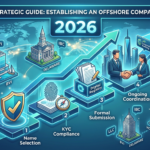
The 4-Step Incorporation Process
Step 1: Select and Clear Your Company Name
Your name must be unique and approved by the local Company Registry. It should avoid restricted terms (e.g., “Bank,” “Insurance,” “Royal”) and must include the appropriate legal suffix (such as “Ltd,” “Inc,” or “LLC”) required by local law.
Step 2: Fulfill KYC (Know Your Customer) Requirements
To maintain compliance and access banking services, you must provide verified documentation. This typically includes:
- Certified copies of passports and proof of residential address.
- A comprehensive description of intended business activities.
- If a corporate entity is a shareholder, additional documents like the Certificate of Incorporation and Registers of Directors will be required.
Step 3: Formal Submission
Once documentation is finalized, it is submitted to the relevant Company Registry. Processing times vary based on the jurisdiction’s efficiency and the complexity of your business activities.
Step 4: Ongoing Coordination
The final step is ensuring all post-incorporation tasks—such as activating your corporate bank account and setting up accounting frameworks—are handled correctly.
For a personalized assessment of which structure and jurisdiction best suit your 2026 business goals, coordinating with the experts at Offshore Company Specialist is the most reliable way to ensure your entity is set up for long-term success.