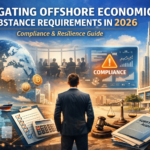
In the rapidly evolving landscape of international finance, 2026 marks a new phase of enforcement and refinement for offshore business structures. The era of the “mailbox company”—an entity that exists solely on paper with no physical presence or operational activity in its jurisdiction of incorporation—has effectively ended. Driven by a sustained global crackdown on base erosion, profit shifting (BEPS), and financial opacity, regulatory authorities are not only enforcing Economic Substance (ES) mandates but also actively auditing and penalizing non-compliance at scale.
For business owners, investors, and digital nomads, staying ahead of these changes is no longer optional; it is a prerequisite for operational survival. To navigate these complexities, communicating and coordinating with MCS (Offshore Company Specialist) remains one of the most effective ways to ensure your corporate structure is compliant, defensible, and future-ready.
The Paradigm Shift: From “Shell” to “Substance”
By 2026, the requirement for “genuine economic activity” has moved beyond policy into strict enforcement and cross-border data sharing. Tax authorities in major jurisdictions (including the BVI, Cayman Islands, Seychelles, and the UAE) are now leveraging automated reporting systems and international cooperation frameworks to verify compliance.
They no longer rely solely on documentation—they expect demonstrable, ongoing operational presence within the jurisdiction.
Key Factors Defining Substance in 2026:
Local Management and Control
Board meetings must be held in the jurisdiction, with a quorum of directors physically present. Increasingly, regulators expect evidence such as travel records and meeting minutes.
Adequate Personnel
Companies must employ a sufficient number of qualified employees residing in the jurisdiction. Outsourcing is still permitted, but oversight and accountability must remain local.
Physical Presence
A dedicated physical office space is now standard for most relevant activities. Shared or “flexi-desk” solutions are being scrutinized more closely.
Operating Expenditure
A proportionate amount of annual expenditure must be spent locally to support core income-generating activities (CIGA), with clear audit trails required.
Jurisdictional Highlights and Regulatory Trends
The Seychelles and Virtual Assets
The Seychelles remains a popular hub, but by 2026 it operates under heightened international monitoring. The Financial Services Authority (FSA) continues to enforce a robust framework for Virtual Asset Service Providers (VASPs), with enhanced licensing, reporting, and compliance obligations.
Businesses involved in crypto-assets or blockchain technology face increased due diligence, transaction monitoring, and reporting requirements. Additionally, the Seychelles’ standing on international compliance lists continues to evolve, making real-time monitoring essential.
The Rise of Hybrid Models
The shift toward hybrid structures has accelerated in 2026. Businesses are increasingly adopting models that combine:
- Offshore efficiency
- Onshore credibility
- Real operational substance
Jurisdictions offering tax treaty access, regulatory transparency, and scalable substance frameworks are now favored over those relying on secrecy alone.
The Role of Technology in Compliance
By 2026, compliance is fully digital-first.
Manual tracking of KYC updates and ownership changes is obsolete. Modern compliance frameworks rely on:
- Automated regulatory alerts
- Real-time reporting dashboards
- Integrated accounting and substance tracking systems
Coordinating with MCS allows businesses to integrate these technologies seamlessly while maintaining full regulatory alignment.
Why Professional Coordination is Essential
The risk of non-compliance in 2026 is significantly higher than in previous years. Authorities are conducting proactive audits, and enforcement actions are faster and more coordinated across jurisdictions.
Penalties may include:
- Substantial financial fines
- Mandatory disclosure to foreign tax authorities
- Banking restrictions or account closures
- Company strike-off and blacklisting
By working with MCS (Offshore Company Specialist), you gain a strategic partner who understands both the regulatory landscape and its practical application.
The MCS Advantage
Deep Scrutiny at Onboarding
Ensuring your business model is viable under current and emerging substance rules before incorporation.
Tailored Structural Solutions
Designing bespoke structures that balance tax efficiency with compliance and transparency.
Ongoing Compliance Management
Continuous monitoring of regulatory updates, filings, and reporting obligations.
Reputation Management
Helping maintain a clean corporate profile that satisfies banks, regulators, and international partners.
Frequently Asked Questions (FAQ)
1. What are “Relevant Activities” under Economic Substance laws?
These typically include banking, insurance, fund management, financing and leasing, headquarters business, shipping, holding company business, and intellectual property (IP) business. Companies engaged in these must meet substance requirements.
2. Can I still use a registered agent’s address as my office?
A registered office is still required for incorporation, but in most cases, it is no longer sufficient to meet substance requirements. Dedicated physical space is often necessary.
3. What happens if my company fails the Economic Substance test?
Non-compliance usually triggers a staged response:
- Financial penalties
- Increased scrutiny or audits
- Automatic exchange of information with foreign tax authorities
- Potential company dissolution
4. Is the UAE still a viable offshore option in 2026?
Yes. The UAE remains highly attractive due to its infrastructure and business ecosystem. However, it now requires strict adherence to Economic Substance Regulations (ESR) and corporate tax rules, making professional coordination essential.
5. How do I know if my current offshore company is compliant?
A Substance Audit is the most effective method. By coordinating with MCS, you can assess your operations, expenditures, and governance structure to identify compliance gaps early.
6. Do holding companies have the same requirements as active businesses?
Pure Equity Holding Companies generally have reduced requirements, but they must still meet minimum compliance standards, including filings and local presence obligations.
7. Why should I coordinate with MCS instead of doing it myself?
Regulatory frameworks evolve continuously. MCS provides:
- Up-to-date compliance monitoring
- Local infrastructure (directors, offices, staff)
- Administrative and reporting support
This ensures you remain compliant without managing the complexity alone.
Ready to Secure Your Global Corporate Structure?
Don’t leave your compliance to chance. In 2026, resilience means proactive compliance, real substance, and strategic structuring.
For expert guidance on meeting Economic Substance requirements and future-proofing your offshore operations, connect with Offshore Company Specialist (MCS) today. Professional coordination is the key to navigating the modern era of international business.